Energy Independence Starts at Home
CONSERVATION MAY 1, 2026
TL;DR — What you need to know:
DERs like rooftop solar & batteries let you generate, store and control your own power.
Grid outages are rising due to extreme weather and aging infrastructure. Solar and storage keeps you powered when grid fails.
47 million people lost power in 2025 during Europe's worst blackout in 20 years. Homes with local storage stayed on.
Federal incentives shifted: Section 25D ended for cash purchases, but Section 48E keeps 30% credit through 2032 for leases. State programs still offer $5K-$16K rebates.
40% of new solar projects now include batteries, up to 60% in some markets.
Battery costs have dropped 75% since 2018, expected to fall another 25% by 2035.
Start here: smart thermostats, rooftop solar, battery storage, community solar
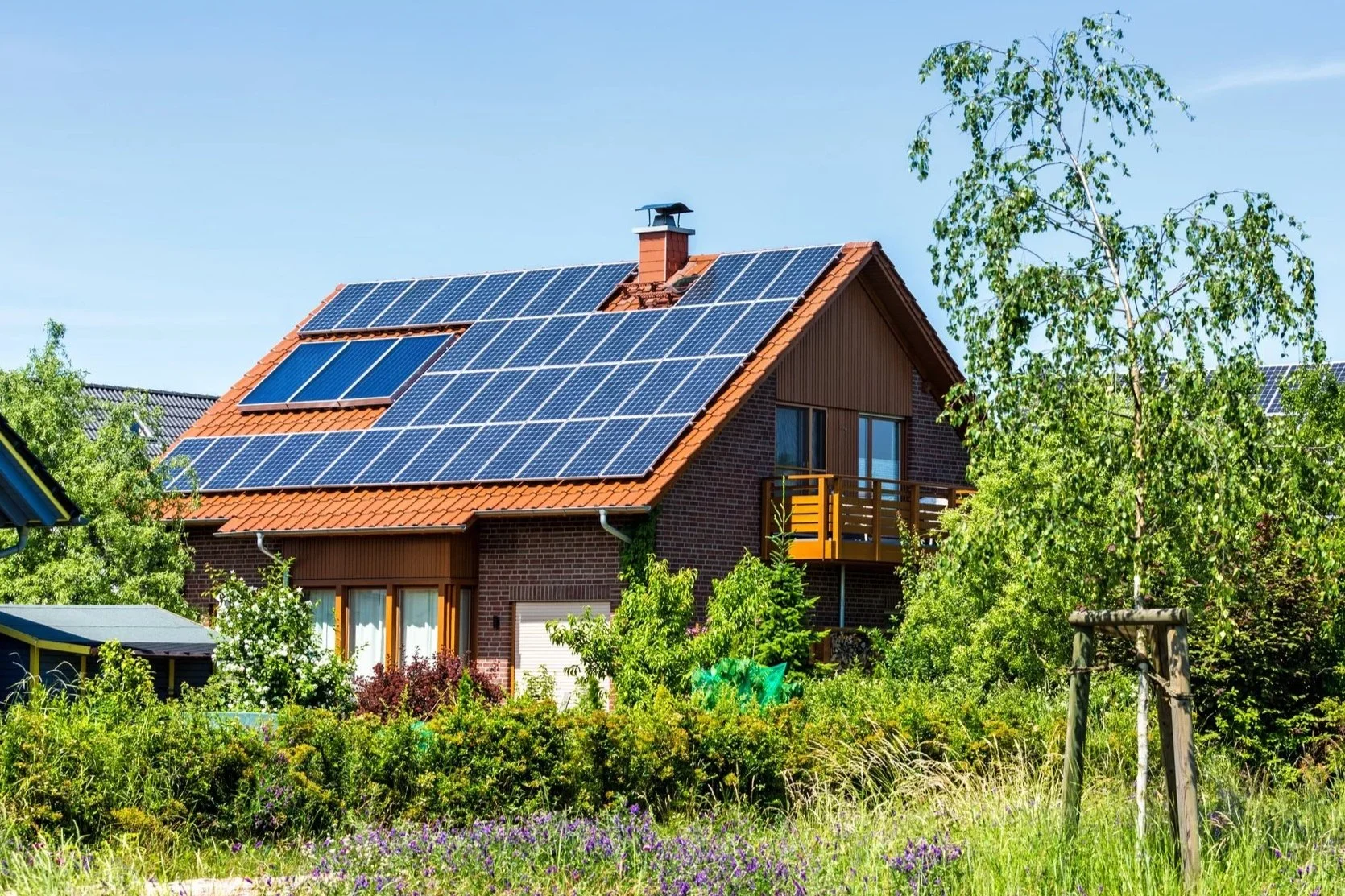
The power to protect your home, your budget, and your community starts on your roof. As centralized grids face increasing stress from extreme weather, aging infrastructure, and surging demand, more homeowners are choosing a smarter path: generating, storing, and controlling their own energy. This is what homegrown energy means in 2026, and it has never been more relevant.
The momentum behind distributed energy is now undeniable. Brent Wanner, head of the power sector unit at the International Energy Agency, put it plainly in a 2026 Bloomberg report: “We’ve now crossed into a point where anytime anyone is looking at investing in the power system, batteries are one of the most attractive options.”
DERs are the technologies making it possible. From rooftop solar panels and home battery systems to smart thermostats and community microgrids, they shift power, both literally and figuratively, from centralized utilities to individual households and neighborhoods.
What Are Distributed Energy Resources?
Distributed Energy Resources are small-scale power generation and storage technologies located at or near the point of use. Unlike traditional power plants that send electricity hundreds of miles through transmission lines, DERs produce and store energy locally.
The most common residential DERs include:
Rooftop solar panels (photovoltaic systems)
Home battery storage systems (e.g., Tesla Powerwall, Enphase, Franklin aPower2)
Smart thermostats and energy management systems
Electric vehicle chargers paired with solar
Community solar subscriptions for renters and those without suitable rooftops
When these technologies are combined and connected, they form a microgrid: a self-sufficient local energy system that can operate independently from the main utility grid when needed. Learn more about how microgrids work. That independence is the foundation of true energy resilience.
Why Grid Independence Matters Now
On April 28, 2025, a massive blackout swept across Spain and Portugal, cutting power to over 47 million people for up to 16 hours. It was the most severe grid failure in Europe in two decades. The final ENTSO-E investigation report, released March 20, 2026, concluded that cascading voltage failures and generation disconnections caused the collapse, not renewable energy. In fact, the ENTSO-E Board Chair stated explicitly: “the problem is not renewable energy, but voltage control.”
The lesson for homeowners is clear: even well-developed grids can fail catastrophically and without warning. Homes equipped with solar and battery storage maintained power throughout the outage. Those relying solely on grid electricity did not.
This is not just a European problem. In the U.S., outages from wildfires, hurricanes, ice storms, and heat waves have become more frequent and longer in duration. California homeowners face planned Public Safety Power Shutoffs (PSPS). The Southeast sees hurricane-season disruptions. The Northeast deals with ice storms that can leave homes dark for days. In Colorado alone, high winds and fire danger have triggered multiple planned utility shutoffs affecting hundreds of thousands of homes in recent years.
The scale of what battery storage can do is also becoming clearer at the grid level. In Australia, shortly after the Waratah Super Battery came partially online in New South Wales, batteries discharged more power during the evening peak than gas-fired plants, according to Bloomberg. The project is expected to reach full capacity in 2026 and is already helping delay a projected gas supply crunch, underscoring storage’s role in energy security.
The Benefits of Homegrown Energy
Energy Resilience
A solar + battery system can keep your essential circuits running during a grid outage automatically, often with a switchover so fast you won’t notice. A 10 kWh battery system can power refrigeration, lights, internet, and basic appliances for 24 hours or more. A study by Lawrence Berkeley National Laboratory found that a small solar + storage system with just 10 kWh can fully meet backup needs over a 3-day outage in virtually all U.S. counties.
Cost Savings
Generating energy locally reduces your dependence on utility rates, which continue to rise. The economics of doing so have also never been stronger: battery storage costs have fallen roughly 75% from 2018 to 2025, according to BloombergNEF, with another 25% decline expected through 2035. Battery storage enables time-of-use optimization: charge when rates are low, discharge when rates are high. Excess solar energy can be sold back to the grid in markets with net metering, though policies vary by state and have tightened in some regions (notably California under NEM 3.0).
Environmental Impact
Every kilowatt-hour generated from your rooftop is one less drawn from fossil-fuel-based grid power. At scale, the collective impact is significant. Rooftop solar directly reduces greenhouse gas emissions and supports cleaner air in communities.
Community Resilience
When individual households adopt distributed energy, the collective benefit multiplies. Neighborhood-scale solar and battery adoption reduces strain on the grid during peak demand, supports energy equity for lower-income communities through community solar programs, and creates more stable, decentralized energy infrastructure that is harder to knock offline.
The bottom line: the financial case for solar and battery storage remains strong in 2026, but the specific path to incentives has changed. Working with a reputable local installer who understands your state’s current programs is essential.
Getting Started: Your Homegrown Energy Options
Select an option to learn more
When one household goes solar, it is a smart move. When an entire neighborhood adopts clean, distributed energy, it becomes a force for change. The future of energy is not just about large utilities managing centralized systems. It is about the collective power of everyday choices made at home.
Energy independence starts at home. And it starts now.
Resources
U.S. DOE Homeowner’s Guide to Going Solar
Solar Energy Resources for Consumers