
How Smart Technologies Can Help Reduce Water Leaks
WATER, SMART CITIES MARCH 2, 2026
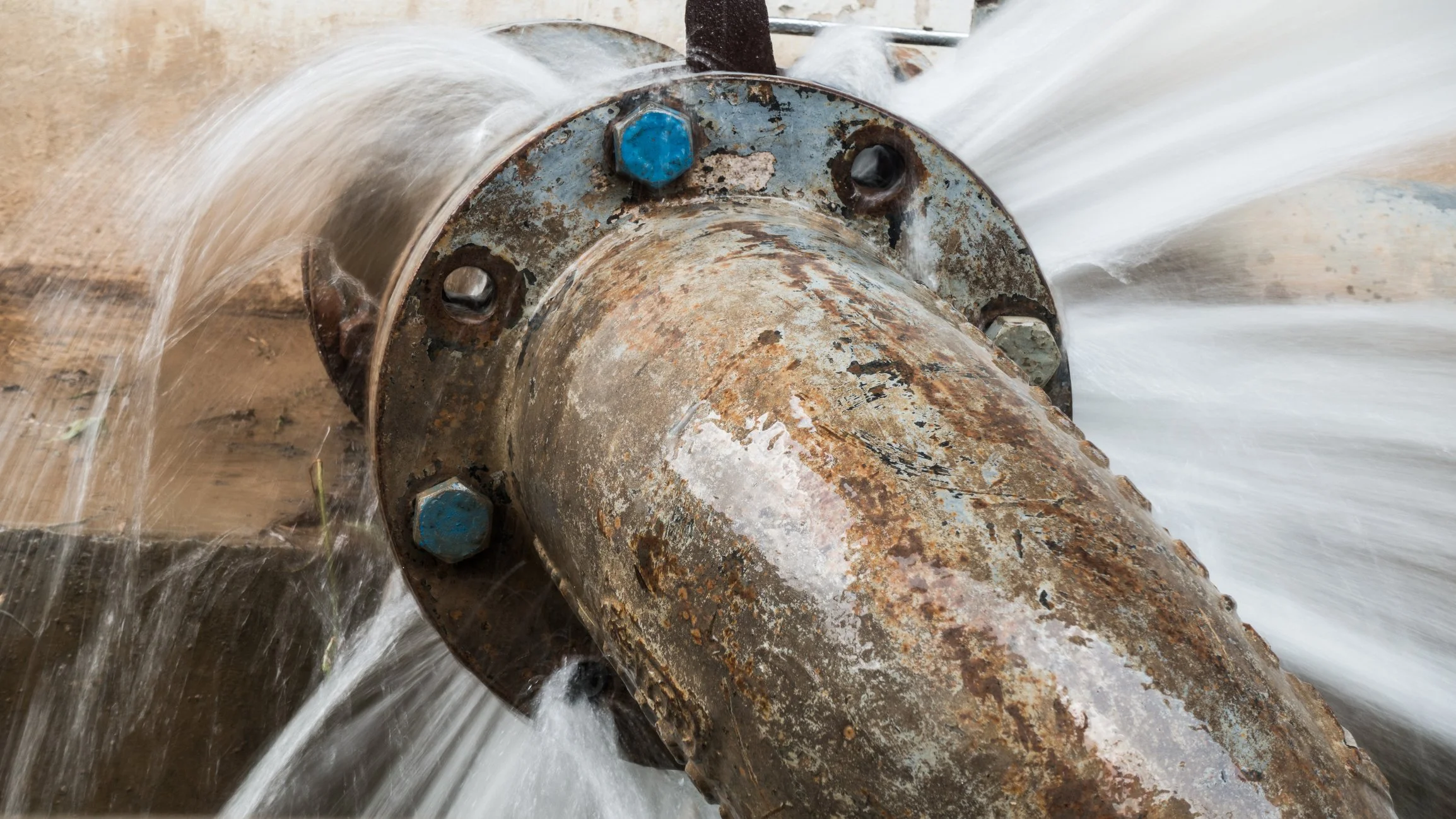
Water scarcity has become an increasingly serious threat due to climate disruption, growing populations, and aging utility grids. While lack of rainfall is an obvious cause of water scarcity, even in regions where water is plentiful, crumbling distribution systems contribute to a staggering loss of life-sustaining resources.
The True Cost of Aging Infrastructure
Our water infrastructure has long been an "out-of-sight, out-of-mind" problem, but the scale of the waste is no longer ignorable. As of 2025, the American Society of Civil Engineers (ASCE) updated the nation's drinking water infrastructure grade to a "C-" in its 2025 Infrastructure Report Card, noting that while investment is increasing, our systems are struggling to keep pace with age.
Recent data from Bluefield Research reveals that the problem is more severe than previously estimated:
6.75 Billion Gallons Lost Daily: U.S. water systems now lose enough treated water every single day to fill over 10,000 Olympic-sized swimming pools.
2.46 Trillion Gallons Annually: This represents nearly 19.5% (roughly 1 in 5 gallons) of all treated water in the U.S. that never reaches a customer’s tap.
Economic Impact: This "non-revenue water" (NRW) costs U.S. utilities an estimated $6.4 billion annually in uncaptured revenue.
Additionally, a study conducted by Utah Water Research Laboratory highlights the physical toll on our networks: the U.S. and Canada still experience approximately 260,000 water main breaks each year, with repair costs exceeding $2.6 billion.
Turning the Tide: Policy and Innovation
While these statistics are alarming, 2025 and 2026 have marked a turning point in how we address the crisis. The Bipartisan Infrastructure Law continues to funnel a historic $50 billion into EPA programs for drinking water and stormwater upgrades. And the integration of Artificial Intelligence (AI) and Operational Intelligence is transforming utility management.
AI-Powered Leak Detection
Modern utilities are moving beyond manual acoustic "listening" to AI-driven anomaly detection. Advanced algorithms now analyze vibration and pressure data from IoT sensors in real-time, identifying the "signature" of a tiny leak before it becomes a catastrophic main break.
Digital Twins
Utilities are increasingly using Digital Twins—virtual replicas of their entire pipe network. These models use real-time data to simulate stress events (like extreme freezes or heatwaves), allowing engineers to predict which pipes are most likely to fail and reinforcing them proactively.
Smart Water Meters
Smart meters are the frontline of conservation. By providing real-time usage data, they allow utilities to:
Notify consumers instantly via mobile apps when a continuous flow (likely a leak) is detected.
Identify "apparent losses" caused by billing errors or theft, which account for roughly 13% of non-revenue water.
In Singapore, a global leader in water tech, the mass rollout of smart meters has allowed the city-state to read meters remotely every day, empowering residents to adjust habits and reducing the time a leak remains active from weeks to hours.
The Role of Consumers: Fix a Leak Week 2026
Conservation isn't just a utility-level challenge; it starts at home. According to EPA household waste statistics, leaks nationwide still account for nearly 1 trillion gallons of waste annually.
As we approach EPA’s Fix a Leak Week (March 16–22, 2026), homeowners are encouraged to take the 10-Minute Challenge:
The Dye Test: Place a drop of food coloring in your toilet tank; if color appears in the bowl within 10 minutes, you have a leak.
The Meter Check: Check your water meter before and after a two-hour period of no water use. If it moves, you have a hidden leak.
Utility Rebates: Many utilities now offer rebates for smart leak-detection systems that can automatically shut off your water if a burst pipe is detected.
You can also try these uncommon winter moves to lower your water bills.
A Coordinated Future
The challenge of water scarcity requires a "triple-threat" response: sustained government funding, utility-side technology like AI and smart sensors, and consumer vigilance. While the 2025 loss statistics show we have a long way to go, the rapid adoption of digital water technology provides a clear roadmap toward a more resilient and sustainable future.

Source: EPA